When Do Your Interests Become an Obstacle?
Specialization makes you faster, while other interests can keep your thinking flexible. How do you pursue both without becoming a collector of abandoned hobbies?
It seems like a given that whenever you imagine a great person, they are great at one thing. Brian May is a guitarist. Nabokov was a novelist. Mario is a plumber. All of them seem exceptional in one field, and we remember them as such.
One job each, as far as anyone remembers. Flip them.
Weirdly enough, all three had at least one other major specialty. Brian May is also an astrophysicist who returned to finish his PhD more than thirty years after Queen took off. Nabokov conducted serious research into butterfly taxonomy and evolution. Mario, meanwhile, has worked as a doctor, professional athlete, racing driver, and part-time rescuer of princesses. His credentials are harder to verify.
They are fun examples, but examples prove very little by themselves. More substantial evidence comes from Michele and Robert Root-Bernstein. Their paper, Polymathy Among Nobel Laureates as a Creative Strategy, builds on research into 773 Nobel laureates. The researchers found that “sustained interests across multiple fields” (having serious hobbies) were unusually common among laureates. Many laureates also described this as a deliberate part of how they worked, and not a pile of unrelated hobbies.
A video about this research actually inspired me to write this article. It presents polymathy as a powerful creative strategy, a super power even, while specialization as something that may eventually restrict your thinking. I agree with much of it, but I do not think that the choice is this clear.
Far transfer is not magic
Are there truly unrelated fields? Think about that one for a second.
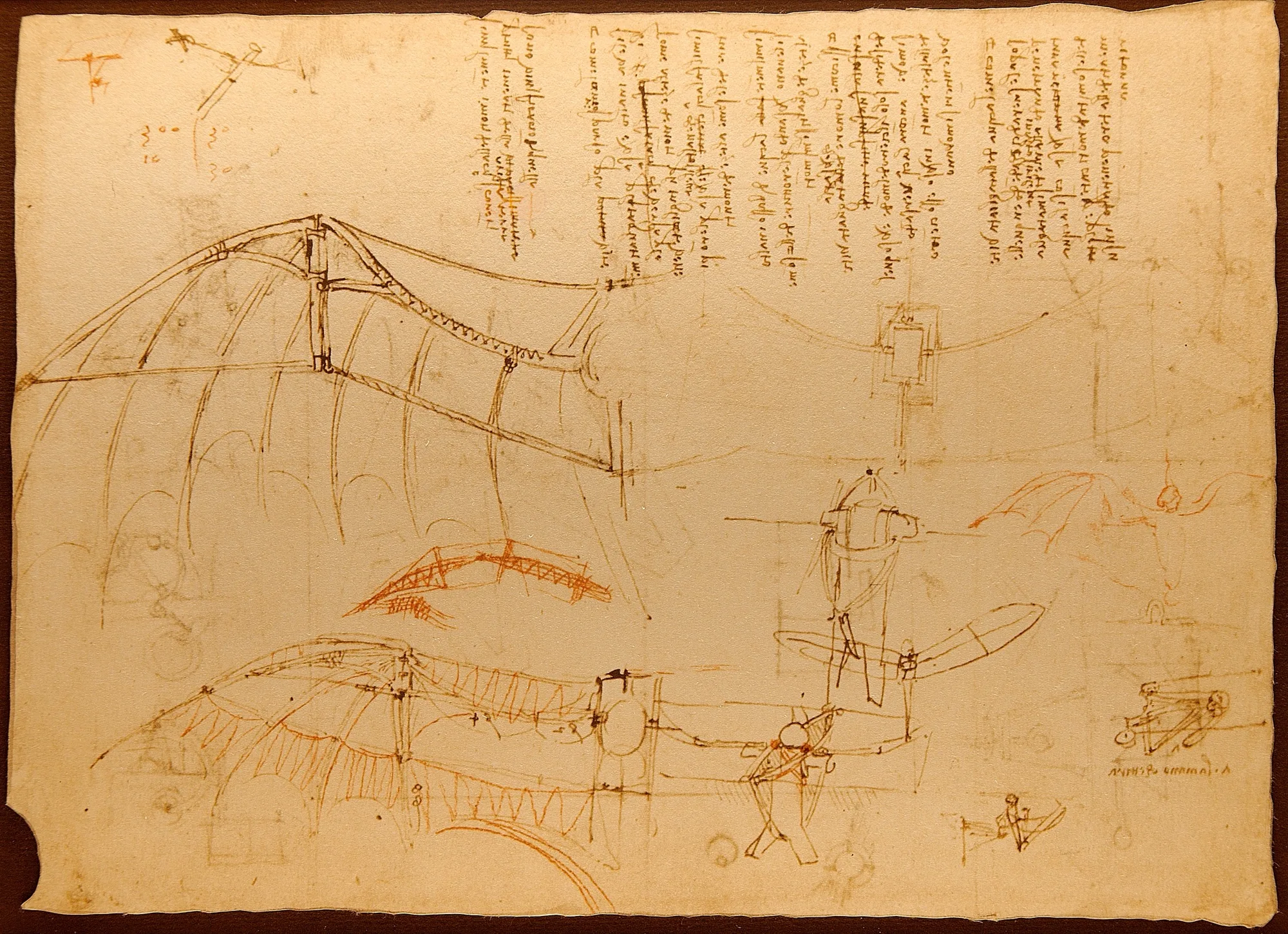
I have been drawing since I was a kid. For as long as I can remember, I have drafted contraptions: flying machines, underwater bells, trap doors, and whatever else appeared in my head. It was fun, but it also trained me to think spatially.
While some of my classmates struggled to understand complex three-dimensional shapes, I could doodle them as I had done for years. Geometry is close enough to drawing, you might say. Fair. But I also imagine programming concepts spatially: stacks, queues, physical memory, database structures, and the relationships between objects. Things occupy places, sit on top of other things, or connect across an imagined space.
That does not mean drawing automatically makes somebody a better programmer. But it goes to show that ideas from distant fields can transfer. And it happens when a particular model, technique, or habit learned in one field fits a problem in another. You think in patterns. You understand through metaphors. You explain the unknown using the known. Another interest gives you more known things to work with—but only if you stayed with it long enough to learn something real.
Cognitive entrenchment is earned
The moment you become good at something, parts of it become automatic. That is not a bug - it is the reward for doing the work.
It becomes hard to draw truly badly when you are good at drawing. It becomes hard to write a magnificently stupid sorting algorithm when you have spent years thinking about performance — although js will always let you try:
[5, 8, 1, 4, 19].forEach((number) => { setTimeout(() => console.log(number), number);});Expertise gives you heuristics: compressed lessons that let you recognize familiar problems and discard bad answers quickly. After enough experience, you can smell bullshit before you have fully explained why it smells.
But the same mental machinery can hide approaches outside your training. A useful shortcut may quietly become a rule. A familiar pattern may be imposed on a genuinely different problem. It is hard to think outside the box when you have spent your whole life building the box — and have become extremely good at building it.
This is why cognitive entrenchment is a bad name for a mostly good phenomenon. You cannot become entrenched without first becoming very freaking good at your field. The goal is not to avoid expertise. It is to build strong models without becoming incapable of noticing when they no longer fit.
Does the Nobel research prove anything?
There is a catch: Nobel committees love work that crosses disciplines. A prize that rewards interdisciplinary discoveries will naturally pick people who are good at working between fields. And then, surprise, the laureates look unusually polymathic.
That does not make the research wrong. It makes it narrower. Polymathy can be a great strategy for rare, integrative breakthroughs. It does not prove that more hobbies will improve the average career, and it cannot untangle cause from circumstance. Did breadth create the achievement? Did curiosity create both? Did success simply buy laureates the freedom to explore? Probably a bit of all three.
A strategy built for a Nobel-grade discovery is not necessarily the best one for learning a language before relocation, getting promoted, or becoming a reliable surgeon. Sometimes breadth hands you an unexpected solution. Sometimes it just slows you down.
Specialization moves fast
I learned to program in nine months. I began with zero knowledge and jumped into pseudocode and drawing boards. By the end, I had built a Java Spring CMS with Angular on top and earned an Oracle certificate.
I studied for eight hours, came home, and continued where I had left off. It may have been the happiest I had been during that period of my life. But I also know that there is no chance in hell I could have progressed that quickly while dividing my attention between several serious interests.
Of course you move faster when you dedicate yourself to one thing. The catch is that you must be able to sustain it. You need the time, energy, and reason to keep going without burning out. You must also be willing to let other interests wait.
If you urgently need a skill and are willing to pay that price - focus. There is nothing intellectually inferior about choosing the shortest road when you need to arrive somewhere.
Sometimes another activity is rest
Concentration also has limits. I believe the best kind of rest is often a change of activity.
Sometimes rest means staring blindly at a white ceiling. Fine, I understand. More often, I recover by picking up something different: playing a song on the guitar, baking a loaf of bread, reading about language development, or modelling a 3D print I have been needing.
This is where hobbies shine. They give you a different kind of problem and a different way to pay attention. They may eventually contribute something useful to your work, but they do not have to. Returning refreshed is already useful enough.
It is a spectrum, not an identity
Most of us are neither pure specialists nor grand Renaissance polymaths. We have one or two things we do especially well, several things we understand partially, and a small cemetery of interests that survived for three Tuesdays.
Do not weave your personality around an archetype. Do not pick up a hobby because a video or blog post told you that polymaths are brilliant. Relax. Remain curious, and pay attention to the interests that keep returning.
The collector trap
There is a difference between exploring and endlessly beginning.
A collector runs toward the brightest new interest, grabs it, and forgets about it a moment later. They buy books they never open and tools that gather dust as soon as the novelty disappears.
Take your time. Stay after the exciting beginning. Allow yourself to struggle, fail, and produce mediocre results. Do not merely crochet a sock; try the scarf with a bird that you are not yet good enough to make. A clumsy object that is genuinely yours has taught you more than a perfect project that never left your imagination.
An interest becomes useful when you give it enough depth to change what you can do or notice. That requires returning after it stops being new.
Give interests their seasons
One way to balance breadth and depth is to give each interest a season.
That does not mean dividing every day into equal one-hour slices. Give something a week, a month, or a longer stretch of concentrated attention. It is much easier to look after an interest when three others are not fighting it for your attention every evening.
Dormant does not mean abandoned. Brian May returned to astrophysics after more than thirty years. Your seasons probably do not need to be quite that dramatic, but the principle holds: you can put something down without throwing it away.
Deliberate switching and impulsive switching are different. Deliberate switching follows a useful period of work. Impulsive switching happens whenever the current interest becomes difficult. One gives your life rhythm; the other keeps you permanently trapped at the beginning.
Conclusion
So when does an interest become an obstacle? When it steals attention from something you urgently need to get done. When you have more of them than you can actually feed. When the next shiny subject becomes your escape route every time the current one asks for patience.
Otherwise, make room for it. Especially when you have been grinding the same work for years, your thinking feels stuck, or something keeps pulling you back long after the novelty should have worn off.
Give an interest enough time to become a skill—and give that skill enough time to change how you think.
Cover: Leonardo da Vinci, design for a flying machine, Codex Atlanticus f. 858r, photo by Luc Viatour, public domain.
Comments
Comments live in GitHub Discussions (via giscus), so you need a GitHub account to join in.